
Content
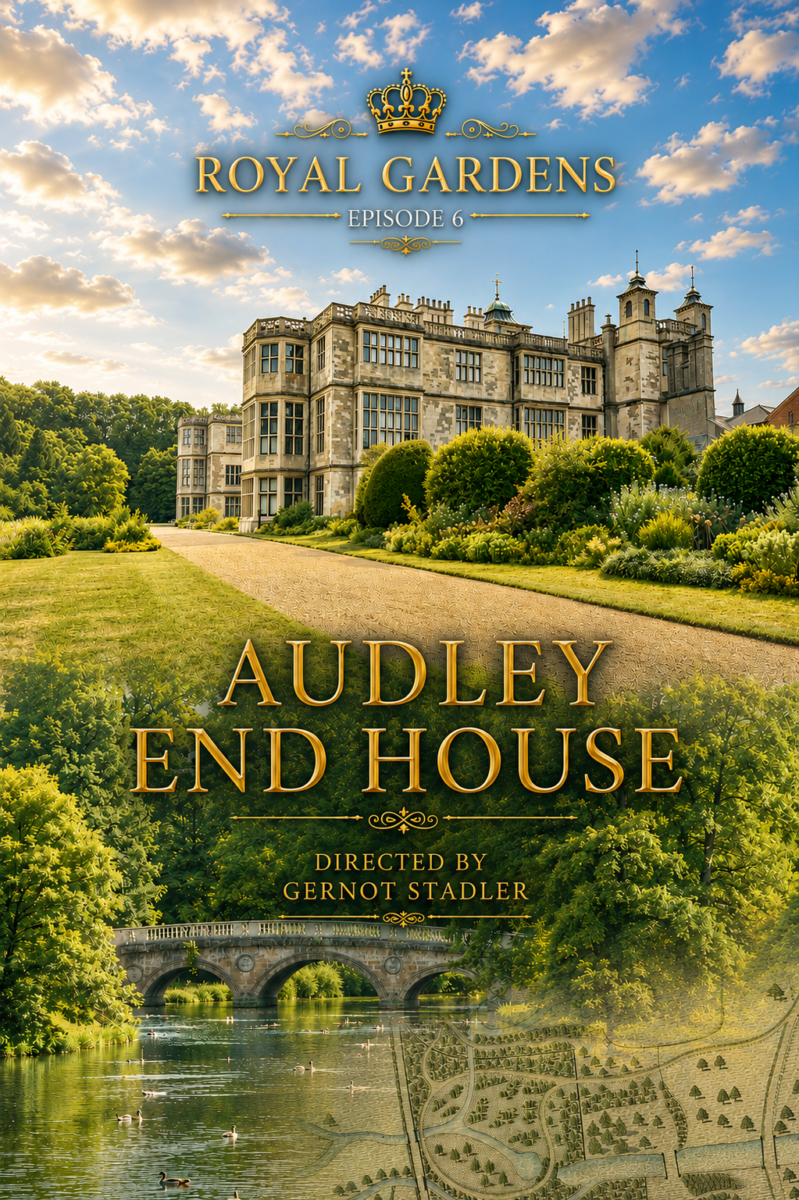
Nestled in the expansive countryside of Essex, on the banks of the River Cam, stands Audley End House—one of England’s most significant country estates, with enchanting gardens whose history spans several centuries. Audley End House was built to impress the King of England. The estate, with its expansive grounds, tells a story of power, prestige, and the evolution of English garden design over the centuries.
Audley End House is an extraordinary English country estate: here, splendor, loss, and constant change come together as in almost no other place. Even the story of its origins is remarkable: in the early 17th century, Thomas Howard, Earl of Suffolk, had Audley End built as a magnificent Jacobean-style palace—so large and splendid that contemporaries described it as one of the most important houses in England. It was, at least temporarily, intended to serve as a royal residence for King James I. In 1668, under Charles II, Audley End did indeed become a secondary residence for the king and his court for a short time, but in the 18th century it was eventually dismantled in several stages to preserve it. Today, Audley End is only one-third of its original size.
This documentary from the international series “Royal Gardens” is a cinematic journey through the history of Audley End House and its gardens: from the strictly geometric layouts of the 17th century to the landscape vision of the 18th century. The focus is on Lancelot “Capability” Brown, who radically redesigned the gardens in the 1760s. The then-owner of Audley End, Sir John Griffin Griffin, commissioned the famous landscape architect to transform the formal gardens into a natural, rolling park landscape. With seemingly natural meadows, meandering waterways, gentle hills, clusters of trees, and carefully guided sightlines, Brown transformed the grounds into an idealized landscape park—a masterpiece that remains to this day the epitome of the English landscape garden.
The film takes us through the various garden areas, such as the sprawling park with its water features and mature solitary trees, the formal parterres near the house that evoke earlier eras, and the walled 19th-century kitchen garden, which reflects the later Victorian gardening tradition. We meet head gardener Louise Ellis, who, together with her team, oversees the care and maintenance of the various garden areas. Curator Peter Brown guides us through the building with its magnificent rooms and uses historical plans to show us how nature and architecture blend at Audley End to create a unique cultural heritage site.
One of the highlights of Audley End is the strictly formal parterre garden with its vibrant display of flowers behind the house, which was laid out in the 19th century under Richard Neville, the 3rd Baron Braybrooke.
A stroll through Audley End is an encounter with famous figures from English history and the magnificent gardens they left behind—in a place where the past and nature blend together in quiet harmony.
Production data