
Content
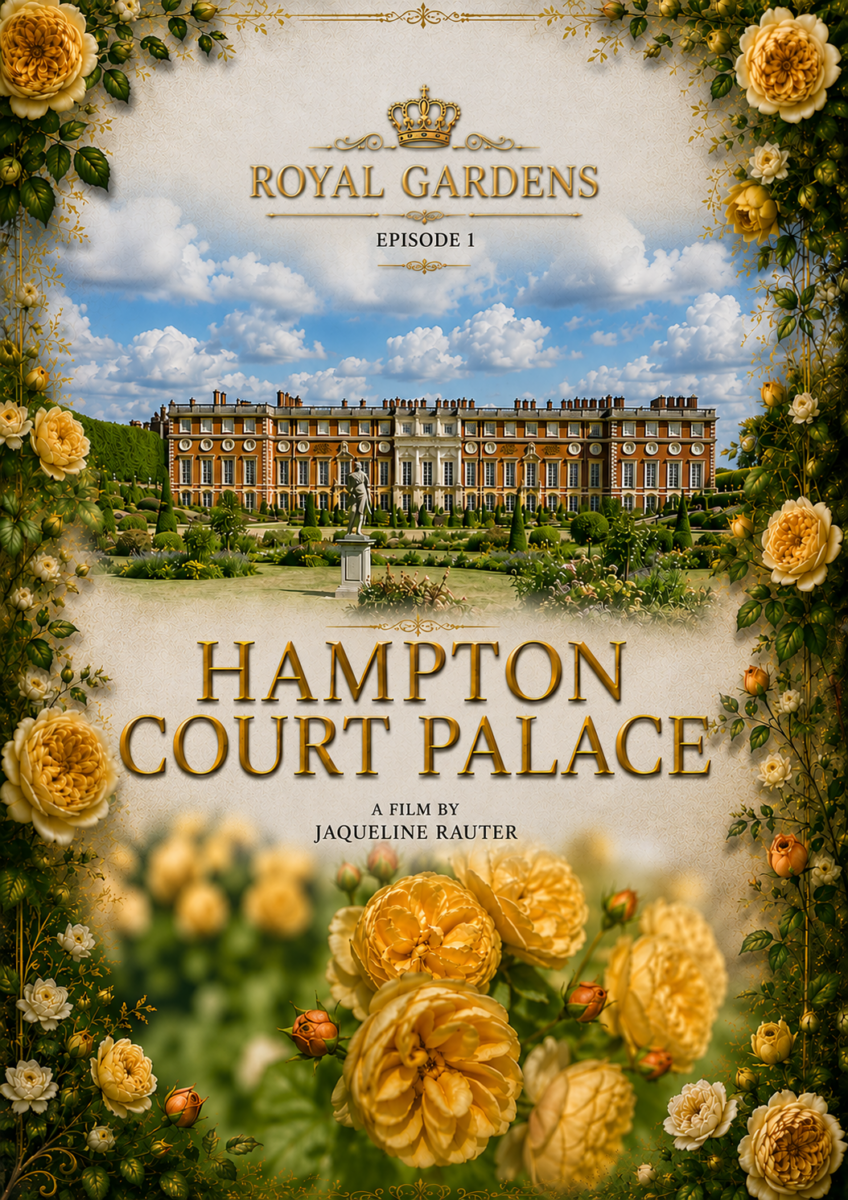
The Royal Gardens of Hampton Court are a melting pot of eras: from the Tudors to the Victorian era, art and nature blend to form a unique legacy. From the Tudors through the splendor of the Baroque to the Victorian era, Hampton Court brings together architecture, garden design, and legends. This cinematic journey explores symbolism, harmony, and history—a living legacy of royal power and aesthetics.
Hampton Court is one of the most significant royal residences in English history. The sprawling palace, with its 330-hectare gardens and parklands, tells a story of power and transience. Here, different eras converge—from the red-brick architecture of the Tudors to the Baroque facades of William III and Mary II, and on to the Victorian garden restorations.
The documentary takes viewers on a journey through a unique ensemble where architecture, art, and nature blend together in a striking way. In the Great Hall, the splendor of late Gothic architecture unfolds; in the private chambers, court life is revealed, straddling the line between privacy and politics. Tapestries, portraits, and ceiling paintings convey the rulers’ messages—artistic representations that showcase piety and wealth.
Gardens are far more than mere decorative accessories. They are an expression of harmony and control, of a sense of beauty and authority. Wilhelm and Maria, who arrived at Hampton Court in 1689, commissioned Sir Christopher Wren to oversee the architectural work and had the gardens redesigned according to the style-defining plans of the French landscape architect Daniel Marot—from the royal private garden to the incorporation of the “Long Water”: a setting full of symmetry and elegance that continues to impress to this day.
Hampton Court is also the setting for living legends. The “Haunted Gallery” commemorates the tragic fates of Henry VIII’s wives. The “Great Vine,” the world’s largest grapevine since the 18th century, still bears fruit. And in the famous hedge maze, visitors have been getting lost in the green corridors for centuries.
In the 19th century, Hampton Court experienced a new heyday: the Victorian era transformed the palace into one of England’s first major tourist attractions. At the same time, extensive garden restorations shaped the landscape as we see it today. The restoration of Baroque forms in the Fountain Garden, the opening of the grounds to the public, and the newly landscaped areas reflect the values of the Victorian era—a balance between preserving history and the desire for public representation.
To this day, Hampton Court stands as a living testament to royal history and, at the same time, a setting for contemporary horticultural challenges. Amid Baroque designs, Victorian plantings, and sustainable concepts, a picture emerges that bridges the past and the future. The gardeners’ passion is evident in every detail—from hedges trimmed to the millimeter to exotic plants that were once brought to Hampton Court from all over the world.
“Royal Gardens – Hampton Court” offers a glimpse into a cultural heritage that is more than just a monument to past power. It is a place where the longing for harmony between people, nature, and history is palpable—a living legacy that continues to fascinate to this day.
Production data