
Content
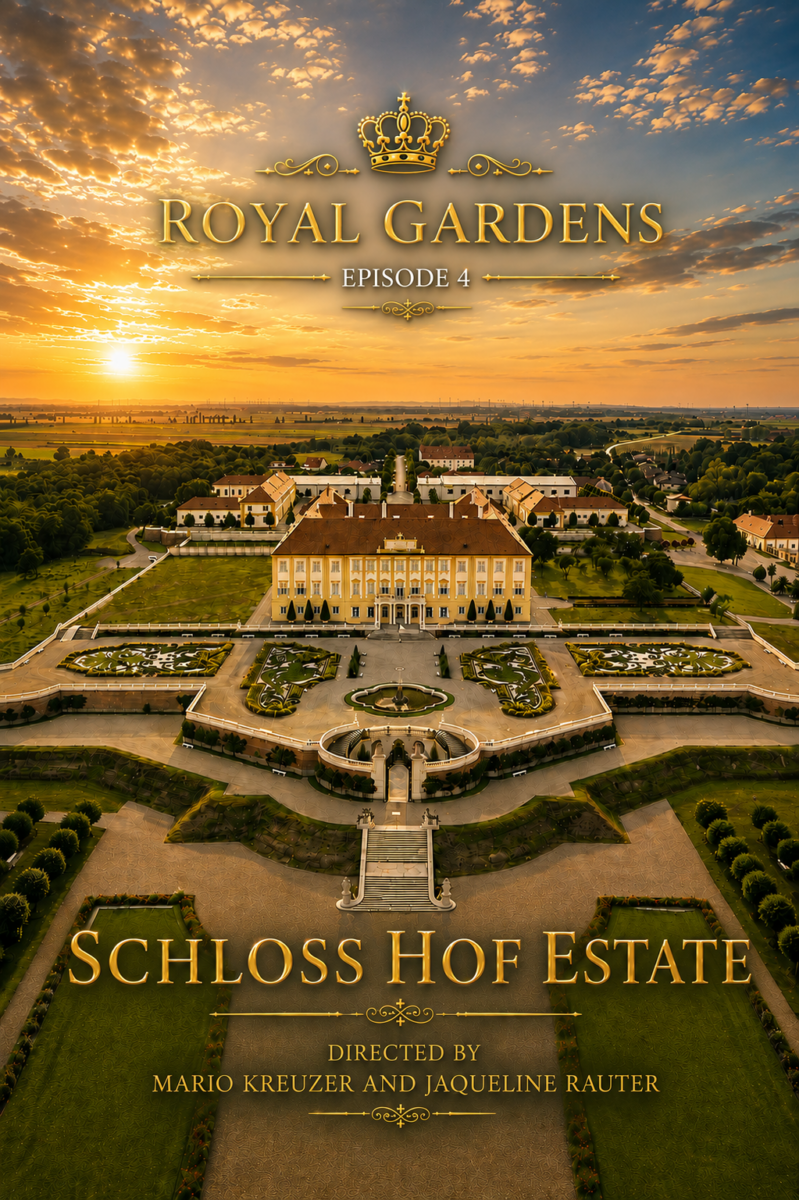
Schloss Hof is located in the Marchfeld region of Lower Austria, not far from the Austrian-Slovak border, and combines Baroque architecture, landscape design, and a country estate. Founded by Prince Eugene and completed under Maria Theresa, the complex tells a story of power, order, and courtly life. The documentary takes viewers through historic state rooms and showcases the botanical diversity and wildlife of the grounds.
About 50 kilometers east of Vienna, Schloss Hof stands near the Danube and the March rivers. In 1725, Prince Eugene of Savoy acquired an existing Renaissance castle and had it expanded into a princely country estate. As a military commander of European stature, he sought a retreat here that combined both tranquility and splendor. Under Empress Maria Theresa, Schloss Hof took on its final form and remains Austria’s largest country palace to this day—a Baroque ensemble in which architecture and landscape design speak a common language.
The documentary takes viewers on a tour of the palace’s magnificent rooms and their eventful history. The Sala Terrena connects the palace to the garden and served as a festive venue for courtly gatherings. The palace chapel has always been a special place—it is one of the few original rooms from Prince Eugene’s time that have been preserved. Under Maria Theresa, the function and use of the rooms changed: playrooms, bedrooms, and private retreats reflect the transformation of court life and a lighter, more personal atmosphere.
In the garden the Baroque style unfolds in all its austerity and beauty. Seven terraces follow a clear layout of axes, fountains, and geometric patterns. Reconstructions reveal the original design—from the Great Cascade, the centerpiece of the complex, to the broderie parterres, bosquets, and artfully designed watercourses. Schloss Hof thus embodies the ideal of the French Baroque garden, in which nature becomes a stage for human creativity.
The estate is also part of this vibrant cultural landscape, telling the story of agriculture, crafts, and food supply in the 18th century. Today, rare breeds of farm animals, peacocks, and the protected European ground squirrel shape the scene, as does the orangery with its potted plants and citrus trees—testaments to a Baroque passion for collecting, cosmopolitanism, and botanical curiosity. To this day, Schloss Hof remains a place where history is preserved, researched, and nurtured. Conservators, gardeners, and experts work to preserve this historical heritage while making it accessible to a broad audience. Together, the palace, garden, and estate create a multifaceted picture that bridges the past and the present.
“Royal Gardens – Schloss Hof” offers a glimpse into a Baroque total work of art that is far more than just a historical monument. It is a place where order and joie de vivre, architecture and nature remain in balance to this day—and whose fascination remains undiminished.
Production data