
Content
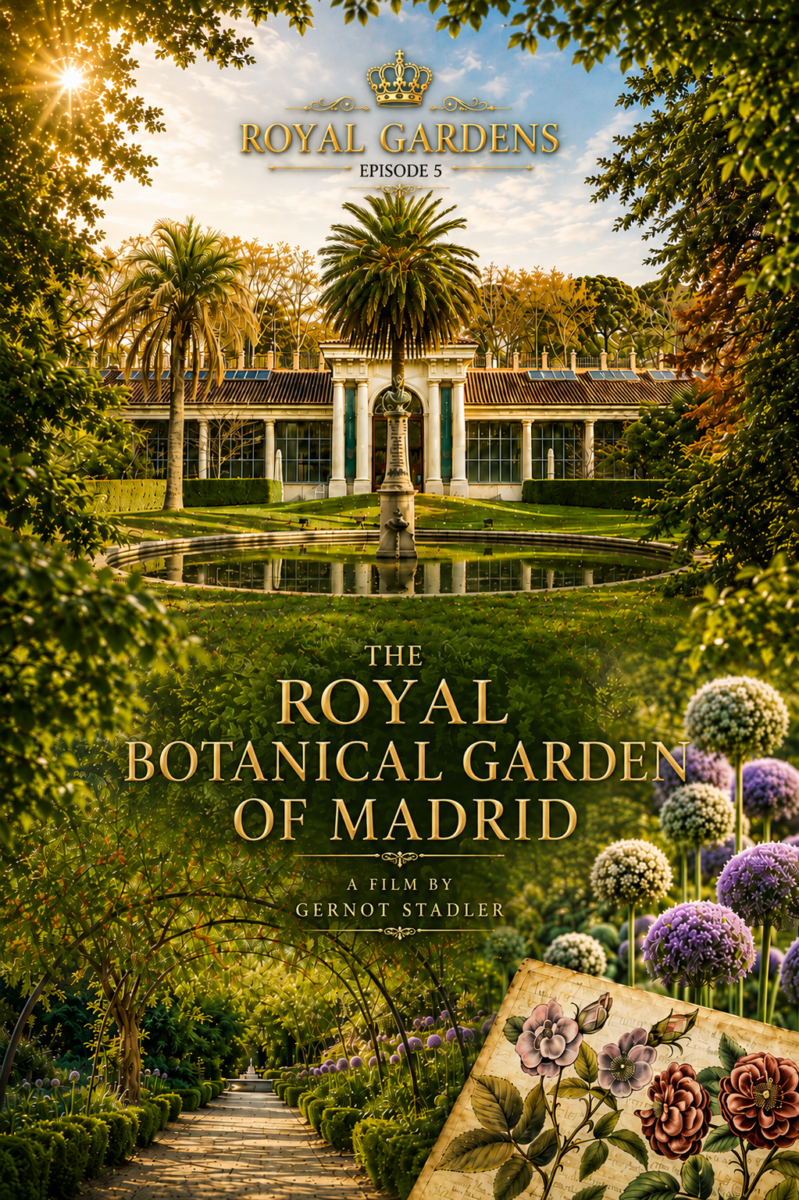
In the heart of Madrid, the Spanish capital, lies a world-class green oasis: the Royal Botanical Garden of Madrid. The garden complex is not only an important recreational area in the midst of a bustling metropolis, but also a significant collection of botanical treasures.
Right next to the Museo del Prado, in the cultural heart of Madrid, is the entrance to the city’s most famous historic botanical garden, the Real Jardín Botánico de Madrid. Originally laid out far outside the city, the Spanish metropolis has gradually expanded into the garden over the centuries. Today, many Madrileños regard the garden as the city’s “green lung” and a place of relaxation. For scientists from around the world, it is an important center for botanical research with a tradition spanning nearly 300 years.
This episode of the series “Royal Gardens” takes viewers on a journey through the fascinating history of the garden and its collections, which were founded in 1755 under King Ferdinand VI of Spain and moved to their current location under Charles III. Guillermo Matamala, a passionate botanist, guides viewers through the garden, which is laid out across four terraces, and enthusiastically explains which plants were brought back by the great expeditions of Spanish seafarers in the 18th century and planted here for research purposes.
Some areas of the garden, with their sometimes austere Baroque structures, date back to its original architect, Francesco Sabatini, who in turn drew inspiration from French gardens. Later, the layout of the terraces was designed according to evolutionary principles. Visitors can follow and understand the evolution of plants throughout the various geological eras along a botanical trail. The spectrum ranges from plant species millions of years old, such as ferns and horsetails, to the most recently evolved plants, the palms. On other terraces, the plants are arranged according to their use in medicine or in the kitchen.
Other attractions at the Real Jardín Botánico de Madrid include the 19th-century greenhouse with its cactus collection and the herbarium with its collection of thousands of dried plants and seeds spanning three centuries. Alex Gomez, curator of the bonsai collection and a trained bonsai master himself, is particularly proud of his botanical treasures. The collection, which he tends with loving care and precision, is one of the largest and most significant in the world, with more than 100 specimens. In the film, Alex Gomez demonstrates what is important when pruning the branches, leaves, and roots of bonsai so that, through years of care, a plant can become a work of art.
The Royal Botanical Garden of Madrid is a testament to the human spirit of discovery, scientific research, and botanical diversity. But it is also simply a place where you can relax and take a deep breath. And should the King of Spain ever come to visit, a special royal gate is available to him, which is opened exclusively for him.
Production data